Thursday, 23 May 2013

Happy Birthday SPD!

Wow, was für ein Tag! Das erlebt man wirklich nicht oft, dass man wohin man auch schaut Gesichter sieht, die man sonst nur aus dem Fernsehen kennt. Gabriel, Steinbrück, Steinmeier, Nahles, Schröder, Schmidt, Hollande, Merkel – alle waren sie nach Leipzig gekommen, und es kam einem so vor, als wäre diese Stadt einen Tag lang Europas politischer Mittelpunkt gewesen. Die SPD hat 150. Geburtstag gefeiert, hier an dem Ort wo 1863 der Allgemeine Deutsche Arbeiterverein gegründet wurde. Ich will nun kurz schildern was heute von Gauck, Holland und Gabriel vorgetragen wurde, und welche Schlussfolgerungen man daraus über die Zukunft der Partei ziehen kann.

Der Festsaal in den letzten
Vorbereitungen
Gaucks Rede war für mich die unspektakulärste. Auf seine gewohnt ‚charismatische‘ Art und Weise plauderte er über die Geschichte der Sozialdemokratie in Deutschland, ging dabei besonders auf die historische Entscheidung ein, sich von den Kommunisten abzugrenzen, ‚denn wo Kommunismus hinführt, das wissen wir ja alle.‘ Wie üblich äußerte er sich auch über die DDR, beschränkte seine Analyse aber auf die dort stattgefundene Unterdrückung. Die Geschichte der SPD fand nur in Westdeutschland statt, woraus für mich der Eindruck entstand, ich muss die Geschichte eines Landes in dem ich nicht geboren bin, als meine eigene Geschichte akzeptieren. Ich war froh als Gaucks Rede vorbei war.

Als der französische Präsident nach dem Abklingen der Marseillaise die Bühne betrat, war vermutlich der Höhepunkt der Veranstaltung erreicht. Hollande bezog sich lange auf das Godesberger Programm, dass die SPD 1959 verabschiedete. Die Partei vollzog mit diesem Programm den Wandel hin zur ‚Volkspartei‘, indem sie sich zur sozialen Marktwirtschaft bekannte. Hollande bekräftigte, dass Reformen und Kompromissbereitschaft nicht bedeuten, dass man keine Ideale mehr hat, sondern dass politischer Realismus der einzige Weg ist, Fortschritte auf dem Weg zu einer sozial gerechteren Gesellschaft zu machen. Hollande erinnerte auch in die Völkerschlacht, und an die Kriege zwischen Deutschland und Frankreich, die Millionen junger Europäer das Leben kosteten. Die wichtigste Aufgabe der Sozialdemokratie in Europe bestünde heute darin, die massenhafte Jugendarbeitslosigkeit zu bekämpfen. Daraufhin gab es minutenlange Beifälle unter stehenden Ovationen. Hollande muss es gut getan haben mal wieder gejubelt zu werden, wenn auch von einer Elite, wenn auch nicht im eigenen Land.

Peer kommt die Treppe runter
Schließlich stieg auch Sigmar Gabriel ans Rednerpult, verhaspelte sich kurz und nannte Merkel die Bundespräsidentin, sagte aber dann er seie ‚seiner Zeit vorraus‘, und brachte so den ganzen Saal zum Lachen. Gabriel rezitierte auf ein neues die Geschichte der SPD, und hob hervor, dass die Partei in ihrer Geschichte als einzige Partei nichts getan hat, dessen sie sich so schämt, dass die ihren Namen hat ändern müssen. Während Merkel am Anfang noch klatschte, tat sie es nun nicht mehr. Gabriel war sichtbar wütend darüber dass Milliarden für die Bankenrettung ausgegeben wird, aber für die Bekämpfung der Jugendarbeitslosigkeit nur Minipakete übrig bleiben, mit der Wirkung von ein Paar ‚homöopathischen Dosen‘. Gabriel redete über Vergangenheit, Gegenwart und Zukunft, und versteht es als die Aufgabe der SPD, zukünftigen Generationen ein gutes, selbstbestimmtes Leben zu ermöglichen. Die SPD bleibe damit ihrem Emanzipationsideal treu.

Was bedeutet die über die Partei? Ich frage mich, was Ferdinand Lasalle als Gründervater wohl gedacht hätte, wäre er heute in diesen Saal gekommen. Ihm wären die vielen Anzüge aufgefallen, die schwarzen 5er BMWs vor dem Eingang, aber auch eine Partei, die nach wie vor zwei Gesichter besitzt. Auf der einen Seite ist da der unterkühlte Peer Steinbrück, der zwar hochkompetent ist, einem aber manchmal so vorkommt, als sei er selbst Interessenvertreter der Großkonzerne. Es vertritt wohl einen Flügel der SPD mit dem ich wenig anfangen kann. Sigmar Gabriel hingegen ist ein leidenschaftlicher Politiker, der für die alten Ideale der SPD steht. Auch dieser, auf Gerechtigkeit besinnte Teil der Partei existiert nach wie vor, und in ihm fühle ich mich zu Hause. Diese Kluft ist in der SPD nicht neu, und insofern hätte Lasalle sich wohl so fremd nicht gefühlt. Allerdings denke ich trotzdem, dass die SPD sich nur dann wieder finden kann, wenn sie eine konkrete, von Werten, und nicht von Realismus geprägte Vision für Deutschland und das vereinigte Europa liefern kann. Eine angepasste, marktkonforme SPD wird sich bei Wahlen nicht durchsetzen können, und wird so weiter zur Depolitisierung unserer Gesellschaft beitragen.

Harald Köpping

Tuesday, 14 May 2013

EUtopia Lost? Thoughts on Austerity

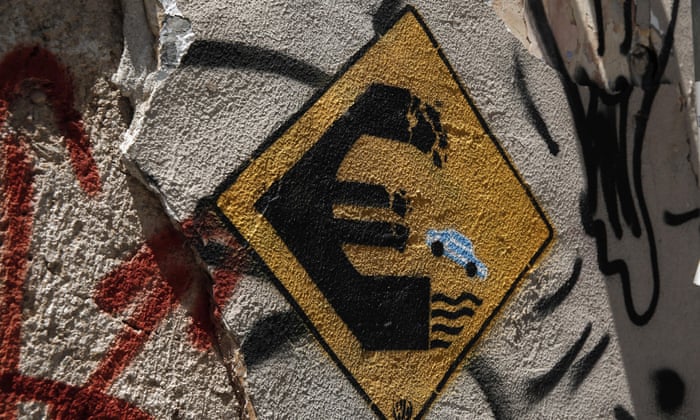
I am truly worried about Europe. I am currently marking essays on the effects of austerity on the eurozone. Perhaps two out of 250 students wrote that deeper integration of the EU would be a way out of the crisis. As a Europeanist, I had always placed my hopes in my generation: a generation of travellers and exchange students, a generation that loves to learn new languages, a generation that experiences the achievements of European integration every day when they use the euro. I read today that particularly the youth of the European south is losing confidence in the European institutions. In France the majority believes that European integration has harmed the French economy. Austerity is devouring the backbone of this Union.

Europe's youth is becoming disillusioned
One would think that the idea of austerity as a means to resolve economic crises had been abandoned ages ago. John Maynard Keynes understood in the 1930s that times of crisis require programmes to boost the economy, and that do not suffocate it. Nevertheless, Europe has chosen the path of austerity. When Germany’s unemployment surpassed reached nearly 5 million in 2005 (11,4%), the Schröder-government introduced austerity measures to fight unemployment. Unemployment benefits were controversially cut quite radically, and the German welfare system received a serious blow. Nevertheless, the policy was afterwards justified by its success. Germany today has one of the lowest unemployment rates in the EU, and it is among the few countries that have survived the crisis relatively unscathed. Following the German example of the 2000s, countries lacking an industrial base embraced austerity, thereby fulfilled conditions that allowed them to receive bail-outs from the IMF and the eurozone. Germany is competing with China over the title of being the world’s largest exporter. Its entire economy is built around exports. A policy that keeps wages low has the same effect as the devaluation of one’s currency. However, such policies only make sense if the economy is based on exports. The economies of the European south are based on domestic consumptions – austerity is bound to fail. The current German dominance in Europe is encouraging the application of a model that is not applicable to economies like those of Spain or Greece.

At the same time, unemployment skyrockets. Europe is largely a post-industrial region with the lowest fertility rate in the word. Never has there been a generation that is proportionally as tiny as mine. While 35% of the population were below 20 in 1950, today merely 20% are below 20. I am part of a small generation, but youth unemployment is higher than ever. Austerity has caused youth unemployment in Spain to skyrocket from 17% in 2007 to over 50% in 2013. Greece, Portugal, Italy and Ireland have experienced similar developments. The blame for this is inevitably and rightly directed at European leaders. Instead of regulating a banking industry that has caused the crisis in the first place, it was decided in the European Council to implement austerity measures that have crippled half the continent. The European Council is an intergovernmental institution that it dominated by the strongest member states, and most Europeans have no say about who leads those member states. There is a time for any emotion, and if you understand what is going on here, you have every right to feel frustration, helplessness, and also anger, against the incompetence, coldness and supposed hyper-rationality of the politicians of our time.

Youth unemployment in the EU
In the the Bible says that a people without vision are doomed. I had always thought that the unification of Europe could provide this vision - I see it not only as a vision for Europeans, but for all of humanity, because it proves that people can work together, and that national divisions are insignificant. This EU has no chance to survive unless its institutions are fundamentally reformed, allowing for a European government that is democratically elected by all Europeans. Austerity is not the choice of Europeans – democracy in the EU is also in crisis. Austerity turning the tides against European integration, and if you believe that the crisis is over, think again.

Harald Köpping

Friday, 22 March 2013

Cyprus: Let the Banks Go Bankrupt!


It seems like the euro crisis is entering yet another phase. Negotiations on the bail-out of the Cypriot banking sector seemed to initially go so smoothly. Cyprus appeared to be just another country making use of the European Stability Mechanism (ESM), and while Greece was humiliated, no one saw Cyprus’ application for the European bail-out fund to be particularly shameful. Operation Cyprus was part of a routine that had entered the Council after years of bargaining. Perhaps that was where the problem can be found. Europe’s policy-makers underestimated the Cypriot problem. The Greek state has survived, the euro is still alive; Portugal, Ireland, Spain, Italy – austerity has been harsh, unemployment has skyrocketed, and poverty is on the rise, yet life somehow goes on. Taking out 6.5% of people’s savings from their bank accounts? Well, the Greeks have been treated like crap as well, and parliament still waved things through, right? I suppose technocracy has reached its limits in Cyprus. Alex pointed out the irony of it all in her last post though. People in Cyprus were enraged by the idea of anyone taking out money from anybody’s bank account, whether they were affected or not. When the government suggested not to touch anyone’s savings if they are below €100,000, people still got angry. Sheep protecting wolves, and deer protecting hunters. I supported the expropriation of savings above a certain threshold, because I believe that the alternative, to introduce Greek-style austerity measures, is even worse. However, to understand what is really going on here, one has to understand whose interests are really being protected.

Germany and the EU: really the right target?
I am certainly not a liberal, yet I believe that in this case, a liberal response of non-intervention is the right way to proceed. Europe ought to rid itself of the plague of investment gambling. I regard the purpose of a bank to be to supply people with loans if they want to build a house or start a business. I took a loan to finance my studies in the UK and in the Netherlands. Banks also serve the purpose of keeping my money safe for us. Rather than storing stacks of money under the bed, I bring my money to a bank, expecting them to store it for me. When I do that I do not expect to take a risk, on the contrary! I believe that whatever else banks do is their problem. No one should have to pay for their greed for profit. The Cypriot banking sector was way out of proportion, and parallels to the Icelandic banking crisis in 2008 are numerous. An economy based on the totally non-productive financial ‘industry’, can, in the long run, not succeed (this also applies to Luxembourg, which seems to follow a similar business model; money laundry is by no means a particularly Cypriot problem). If the Cypriot banks face bankruptcy, then to hell with it, let them sink. Rather than using our money to finance immoral business activities in the banking sector, use the funds of the ESM to guarantee people’s savings for up to €100,000. There is no need for private banks. So many people who studied with me now work for the banking sector, which produces absolutely nothing, and which grows on the soil of greed and selfishness. People should spend their creativity and their energy on doing something useful. The Cypriot government should select the bank with the most solid business model, and nationalise it. There is no need for more than one bank in a country with 750,000 inhabitants, and that bank’s total assets do not have to amount to €40bn (more than twice the total GDP!). Let the banks go bankrupt! Rich people would lose their savings (which were useless to the economy anyway, if they were lying dormant on a bank account), shareholders would lose their shares. People need to realise that few people will be affected by this, and that our economy, not just in Cyprus, but in all of Europe, requires an ablution of the financial industry.

The affairs of the Cypriot state must obviously be allowed to continue, and funds from ESM can be made available for that. The main reason Cyprus got into trouble is the entanglement of the Cypriot banking sector with the sovereign debt crisis in Greece, which was of course itself partially caused by the financial crisis in 2008. Nevertheless, while the Cypriot state may of course be criticised, I think that many of these criticisms apply to the dominant members of the eurozone as well. Reforms are necessary all over Europe especially in Luxembourg, not just in Cyprus.

I don’t think that this is what’s going to happen of course. The new phase of the euro crisis is that the bankruptcy a member has very much become an option, and I would not be surprised if that’s what we’re going to see in the next couple of days. Just remember that there would have been an alternative. Supporting further bank-bailouts turns us into sheep protecting wolves.

Harald Köpping

Thursday, 21 March 2013

Unangenehme Wahrheiten: Gedanken zu "Unsere Mütter, Unsere Väter"


„Der Krieg wird das Schlechteste in uns hervorbringen“ – das war die Hauptbotschaft des ZDF-Fernsehdreiteilers über das Schicksal von fünf jungen Menschen während des zweiten Weltkrieges. Es ist auch die Botschaft von Martin Schulz, dessen Rezension des Filmes heute morgen in der Frankfurter Allgemeinen stand. Ich lebe schon seit über einem Jahr in Deutschland (sehr zum Leid meiner Eltern!), und von Beginn an war ich erstaunt über die Menge an Dokumentationen über den zweiten Weltkrieg und die Nazis, die hier im Fernsehen gezeigt wird. Es ist inzwischen schon fast zu einem Spiel für Harald und mich geworden. Abends macht es den Fernseher an, und sofort sieht man Bilder vom Krieg oder von Hitler. Halb schockiert, und halb amüsiert, sage ich ihm dann: „Ich Deutschen seit ja besessen!“ Vielleicht wegen meiner Schulbildung dachte ich immer, dass diese Zeit vorbei wäre, Teil einer anderen Ära; dass die europäische Einigung schlechte Erinnerungen vertrieben hat, und dass wir weiter gegangen sind, dass dieser Teil der europäischen Geschichte dort bleiben wird wo er in gehört: in die Geschichtsbücher. Die Eurokrise hat mir das Gegenteil bewiesen. Es hat mir gezeigt wie zerbrechlich die Konstruktion eigentlich ist, die in Westeuropa seit den 50er Jahren gebaut wurde.

Szene auf "Unsere Mütter, Unsere Väter"
Unsere Mütter, Unsere Väter, ist wohl der erste deutsche Film den ich über den zweiten Weltkrieg gesehen habe. Zwar habe ich noch nicht alle drei Teile gesehen, kann ihn aber trotzdem sehr empfehlen. Ich wünschte, dass er übersetzt und in Griechenland gezeigt wird, dann mir ist etwas sehr unangenehmen widerfahren. Es begann letztes Jahr zu Ostern, als ich mir Harald nach Griechenland flog um mit meiner Familie zu feiern. Nach einem tradionellen Lammessen kam ein Nachbar zu mir, und riet mir dazu, Harald als Österreicher vorzustellen, denn man weiß ja nie... Es gibt Leute da draußen, denen es nicht gefallen könnte, dass er Deutscher ist. Harald und ich haben natürlich gelacht, und fanden das alles lächerlich. Aber jetzt, wo ich darüber nachdenke, war es gar nicht so lächerlich. Die griechischen Medien haben die Bevölkerung mit der Idee bombardiert, dass der Merkel-Schäuble-Block den Süden vernichten will. Es hat nicht lange gedauert, bis erste Vergleiche der Situation in Griechenland mit dem zweiten Weltkrieg laut wurden. Das macht Harald natürlich sauer. Ganz Europa hat durch diesen Krieg Millionen Menschenleben verloren, Deutschland 10% seiner Bevölkerung, Griechenland 4.5%, Polen gar fast 20%. Hier an Deutschland sind die Spuren den Krieges in jeder Straße nach wie vor zu sehen.

Schulz erinnert daran, welches Geschenk Deutschland nach dem Krieg gemacht wurde, dann ganz Europa erlaubte dem Land einen Platz in der Völkergemeinschaft, dass der Schumanplan und nicht Versailles Europa Frieden bringen sollte, welcher auf Vergebung statt auf Rache setzte. So steht es ist der Erzählung der europäischen Einigung, einer Erzählung der Vergebung. Mit dieser Erzählung im Hinterkopf ist es reichlich schwierig die momentane Situation zu verstehen. Die europäischen Bürokraten sind nicht dafür ausgerüstet, das was im Süden passiert zu verstehen, oder darauf zu reagieren. Die Wahrheit ist das der ursprüngliche Monnetplan für Deutschland Versailles sehr ähnlich war. Der Schumanplan kam nur durch amerikanischen Druck zu Stande. Die Wahrheit ist, dass Deutschland sehr wohl bestraft wurde, denn es wurde durch die Mächte dieser Welt geteilt. Die 50 Jahre Sozialismus sind dazu verdammt als ein dunkles Zeitalter in die Geschichtsbücher einzugehen, und die Ostdeutschen von heute müssen sich der Geschichtsschreibung des Westens anpassen.

Oft habe ich die Weimarer Republik mit dem heutigen Griechenland verglichen. Ein wirtschaftlicher Niedergang kann das Schlimmste in uns hervorbringen, genau wir Unsicherheit über die Zukunft. Hoffnungslosigkeit bringt in Gesellschaften des Schlechteste zu Tage. Sowohl die Weimarer Republik als auch Griechenland sind Opfer unseres Wirtschaftssystems, einem System, in dem Profit und Geld mehr Wert haben als Menschen; einem System, wo Krieg sich positiv auf das Wirtschaftswachstum auswirkt, während das Gesundheits- und Bildungswesen nur Kostenpunkte darstellen; einem System, in dem Leben ein Geldwert zugeteilt wird (menschliches und tierisches); einem System, dass die Menschen in Zypern dazu getrieben hat, das Geld der 1% zu verteidigen, die sich einen Dreck um Armut scheren. Ich war schockiert als ich Bilder von Menschen sah, die ihre Banken, und damit das Geld der Reichen, versucht haben zu verteidigen (denn wenn man mehr als €100.000 besitzt, ist man reich). Ich habe gehört, dass die zypriotische Regierung vorgeschlagen hat, die Steuern zu erhöhen, und die Renten und Einkommen zu senken, anstatt die Einlagen anzutasten. Wir alle sind Opfer dieses Wirtschaftssystems. Leider schieben wir die Schuld lieber auf leichtere Ziele.

Nun aber zurück zum Film und zu den Kommentaren von Martin Schulz, bei denen ich mir ebenfalls wünschen würde, dass die auf griechisch übersetzt werden. Ich wünschte, dass die deutsche und die griechische Öffentlichkeit öfter und besser miteinander in Kontakt treten würden. In Wirklichkeit hat Deutschland nämlich die seine Vergangenheit vergessen, während andere europäische Länder ihre faschistische und nationalistische Vergangenheit unter den Tisch gekehrt haben. Die Griechen sollten an die Gefahren des Nationalismus erinnert werden, und die Deutschen sollten daran erinnert werden, dass das westdeutsche Modell im Osten nicht ganz aufgegangen ist. „Die schauen auf den Reichtum der Westdeutschen herab; Westdeutsche sehen Ostdeutsche als faule Opportunisten die für nichts etwas haben wollen. Ostdeutsche finden Wessis arrogant und aufdringlich, und Westdeutsche finden Ossis faul und nichtsnutzig“ (Barnstone, The Transparent State). Erinnert euch das an irgendetwas? Ironisch, oder?

Alexandra Athanasopoulou

Inconvenient Truths: Lessons from Europe's Past


War brings out the worst in people. That was the message of the new trilogy produced by ZDF about WW2. That is also the message, that Martin Schulz, the current president of the European Parliament wrote in his analysis of the movie today in the Frankfurter Allgemeine. I have been living in Germany for more than a year now, at the great despair of my parents, and I was astonished from the very start by the amount of documentaries about WW2 and all the aspect of the Nazi regime are shown on TV here. It has become a game between Harald and me. Every night he turns on the TV on a channel that shows a documentary about Germany between 1933 and 1945, and I tell him half-shocked, half-amused, “You Germans are so obsessed!” I have always thought, maybe because of my education, that this time was over, part of another era. That the European integration process had waved away bad memories, and that as we move on, this part of Europe’s dark past will forever stay where it belongs: in the history books. The euro crisis proved me wrong; it proved that everything that has been done in western Europe since the end of the Second World War was a very fragile construction.

Five friends' naivity before the war experience
Unsere Mütter, Unsere Väter, is probably the first German movie that I saw about WW2. I haven’t seen all three parts yet, but I am definitely recommending it. I wish they could translate it and show it in Greece, because I have experienced something that I profoundly dislike. It started last Easter when Harald and I went to Greece to spend it with my family. After the traditional lamb a neighbor came over and said to me, that we should say that Harald is Austrian because you never know. There are people out there who might not like the fact that he is German. Harald and I laughed of course at the ridiculousness of the comment. But now that I think about it, it is not that ridiculous. Greek media have bombarded Greek public opinion about how the Merkel-Schäuble block wants to destroy the south. Naturally, it was not long until the first pictures of Merkel portrayed as Hitler were published. It was not long until people started talking about comparing the current situation to WW2. This of course pisses off Harald. Germany lost 10% of its population during the war, Greece 4,5%. and the traces of the war are still visible today in Germany in nearly every street.

Schulz reminds Germans of the great gift that the rest of Europe gave to Germany, allowing it to come back to the table of nations, that the Schuman Plan came as an alternative to Versailles, that it was forgiving and not vengeful. This is the existing narrative of European integration; the narrative of forgiveness. Having this narrative in mind it becomes quite difficult to understand the current situation. European bureaucrats are ill equipped to respond or to understand what is happening in the south. The reality is that France’s initial plan for Germany (as drafted by Monnet) was a very Versailles-style treaty. It was only after American pressure that the Schuman Plan was created. The reality is also that for long Germany was punished, divided by the great powers of this world. The fifty years of socialism are condemned to stay in history books as a dark period, and East Germans today are expected to adopt the history of West Germany.

I have many times compared the Weimar Republic to the current situation in Greece. Economic despair can bring out the worst in people; so can uncertainty about the future. Hopelessness brings out the worst of societies. Both the Weimar Republic and today’s Greece are the victims of our economic system. A system that puts profit and money above people; a system that counts wars as positive and health and education as negative in our GDP; a system that puts a monetary value on life (human and animal); a system that made the majority of people in Cyprus defend the money of the top 1% who have never given a crap about the poor. I was shocked when I saw Cypriot citizens defend their banks and rich people’s money (because when you have above than 100,000 euros in the bank you are rich). I heard that the Cypriot government, in an attempt not to touch the bank’s deposits, suggested tax increased and wage and pensions cuts. We are all the victims of our economic system. Unfortunately we prefer to blame easier targets.
Coming back to the movie and Schulz’s comments, I wish that they could be translated in Greek. I wish both Greek and German public spheres would interact more and better. In reality Germany was never allowed to forget about its Nazi past, but all other European countries were allowed to forget about their inconvenient fascist or nationalist pasts. Greeks should be reminded of dangers of all extreme nationalism and Germans should be reminded of the failure of the West German model in East Germany. “East Germans resent the wealth possessed by West Germans; West Germans see the East Germans as lazy opportunists who want something for nothing. East Germans find Wessis arrogant and pushy, West Germans think Ossis are lazy and good-for-nothing” (The Transparent State: Architecture in Politics in Postwar Germany, by D. Barnstone). Reminds you of anything? It’s ironic isn’t it?

Alexandra Athanasopoulou

Monday, 18 March 2013

Cyprus and the Failed Placebo


The euro crisis is back. It’s not like Alex or I ever believed that it was gone of course. The news from Alex’s family in Greece was anything but promising, and the numbers seem to speak for themselves. At the same time Europe’s policy-makers seem to have adhered to a new strategy: talk the crisis away. The idea was simple. If we say that the worst part is over, we will restore confidence in the credit-worthiness of the eurozone. That’s how it is with crises in the capitalist system: Keynes showed us that there is inherent instability, that crises are inevitable, but that each crisis will eventually subside. The ‘placebo’-rhetoric that Schäuble and Barroso engaged in seems to have failed though. This crisis will not just subside. In fact, it cannot subside, as long as the disparity in the political economy of the eurozone has not been tackled. In fact, the crisis has caused the different member states to drift further apart. While German unemployment is at a record-low, some areas of the region struggle with 25% unemployment, not to mention the millions of youths who struggle to find work.


Since the weekend, you cannot take out money from
a Cypriot bank
The euro crisis has entered a new phase. Merkel announced a few years back that “your savings are safe” – I guess that is another phrase that has vanished somewhere on the landfills of the crisis. Cypriot savings are no longer safe. Every single costumer of Cypriot banks will be charged at least 6.5% of their savings to save the Cypriot banking sector. Those who have over €100,000 on their bank accounts will lose 10%. Obviously those who are affected by this measure are shocked. A precedent is set for the expropriation of the people. No government has fallen, no revolution has broken out. It is likely that this was merely a first in a number of similar events. Bullion traders, rejoice! The important question is though: is this is good idea, and, perhaps more importantly, is it fair?

I think the answer to both questions in yes. Government policy has rendered saving up money redundant. Inflation rates are higher than interest rates, so if you still have a savings account with a significant amount of money on it, it is perhaps time to get rid of it and invest in a house or some other physical commodity. Low interest rates are intended to boost domestic consumption, because money is made cheaper. At the same time, inflation acts as a hidden tax. I would rather prevent the devaluation of money by means of the Cypriot policy, than to flood the money supply with more or less interest free loans from the ESM.

Nevertheless, I don’t think Cyprus went far enough. Rather than submit to EU/IMF hegemony for the time being, and to surrender its economy to a structural readjustment programme, Cyprus should have covered their entire budget deficit using people’s savings. However, the 6.5/10% rule is overly simplistic, and the percentage should have increased gradually from 1% for €10,000 to 20% for over €200,000. Everyone with savings under €10,000 shouldn’t have had to pay at all. Using this scheme, the €18bn that Cyprus apparently required could have been collected using the domestic money supply. I believe that should this policy have to be repeated, this will be the way to go. If you argue that the government shouldn’t take money from people just like that, perhaps you should consider that this is really just an emergency tax.

Whether or not this policy will work out is another question. If I lived in a country affected by such measures, I would immediately withdraw all my money from my bank account. This is probably what will happen in much of the European south, if it has not already taken place (like in Greece). I don’t know what’s going to happen in the next few weeks, although it seems increasingly apparent that Italy’s problems are far from over. A stable money supply does not solve problems of mass unemployment, corruption, and, most importantly, economic dependency. Germany has done nothing about its low-wage policy, and continues to be the manufacturing engine of the continent. This causes money to flow into Germany, and out of the south. Without a solidarity mechanism in place, problems can only worsen.

Harald Köpping

Saturday, 23 February 2013

A Meaty Mess - On How to Reduce Europe's Meat Consumption


Meat is yummy. We cannot deny it. Living in Liverpool for a couple of weeks, we have found it hard to resist the British ‘delicacies’ gleaming at you in the shelves of Tesco or Sainsbury’s. Bacon, Cumberland sausages, burgers – you name it, we’ve probably eaten and loved it (with the exception of black pudding, which Harald loves, but which Alex finds disgusting). Nevertheless, at the same time we have attempted to reduce our meat consumption significantly over the past couple of years. Rather than eating meat every day, we try to limit ourselves to smaller quantities, once or twice a week, although we do occasionally give in to the local kebab shop. You could make this decision for a number of reasons: the horsemeat scandal that is currently reminding Europe of the way the meat industry works; the strong correlation between intestinal cancer and meat consumption; or the vast amounts of resources consumed for the production of meat. Each one of these reasons is probably sufficient to either reduce one’s consumption of industrially-produced meat, or to stop eating meat altogether. For us the most important reason is the abominable treatment of animals. Rather than shocking you with statistics and images right here, we will attach some graphs at the end of this post.

Not all cows are as happy as this one.
Europeans must drastically reduce their meat consumption. This is a moral responsibility. Halving out meat consumption of currently 82kg per year will cause a drastic reduction in carbon emissions, a significant improvement in cancer risk and thus life expectancy and it will hopefully cause the meat industry to overthink its ways of treating animals. What we disagree about is how this can be achieved. For that reason, rather than offering a single solution, we will present three possible responses: 1. to introduce a meat tax; 2. to increase the regulation of the meat industry; 3. to raise public awareness causing metanoia.

The first method of getting people to reduce their meat consumption works via the price mechanism: if you increase the price of a product, less people will buy it. Seems logical, right? After all it worked with cigarettes. What you could do is to introduce a meat tax on all products containing meat, either processed or fresh. A meat tax of 100% would double the meat prices, and demand would plummet. People would still buy meat, but in smaller quantities, and not out of principle, but because it is too expensive. The revenue from this tax could be used to modestly subsidize organic meat, making it only marginally more expensive than non-organic meat. It is likely that demand for organic meat will skyrocket, which will again drive up the prices, requiring further subsidies. In the long run, you could achieve that people will eat more organic meat, which the overall meat consumption decreases. However, there is of course a downside to all of this. The cattle farmers themselves have been struggling for years with a trend that is driving prices down, and sudden reduction in meat consumption would inevitably cause thousands of cattle farms to close down. Perhaps this is inevitable if Europe is to reduce its meat consumption. Nevertheless, some time should be allowed for farmers to transition to the new food economy.

The second method that we have discussed in some detail is heavier regulation of the meat industry. A meat tax would do little to improve the living conditions of the animals involved. One could thus enforce a limitation to farm sizes, allowing for example only 150 cows, 500 sheep, 300 pigs or 1000 chickens per farm. A modest meat tax could be introduced (5%?), allowing subsidies to flow into the transition to the new farming system. One could enforce that all animals have to be kept outside for at least 6 hours per day, and that they have to have a sufficient amount of space, that is far greater than what is currently allocated to them. The organic model could be adopted on all farms within ten years. Again, meat prices would vastly increase as a result, but revenues from the meat tax could be used to ensure farmers’ survival. The mechanism causing a reduction in meat consumption is the same as in the first case, as prices would go up. However, the public debate resulting from these regulations would also increase public awareness, allowing for more responsible eating habits.

Finally, it could be argued that the planned approaches mentioned so far would inevitably fail due to resistance from the European meat industry, which is able to exert huge amounts of influence on governmental institutions such as the European Commission. School curricula could for example be adopted to educate pupils about the life of a cow or a chicken. Those citizens who want to get involved could launch public awareness campaigns about healthy eating and the living conditions of animals. The intention would not be to turn everyone into vegetarians, but to get them to think about where they purchase their meat. It is a thousand times better to get meat from a local butcher than from the supermarket, be it Tesco, Kaufland, Carrefour or Delhaize. What is certain is that this process would take a while to be implemented, and until a true change of mind takes place. Despite one meat scandal after the other, meat consumption in Europe remains high, or even goes up.

It’s up to you to decide now which method you favour. They each have their pros and cons, and perhaps a combination of all three would get the job done best. Next time you buy meat, which might be today, think about where your meat comes from, and if possible, try to buy from your local butcher.

Alexandra Athanasopoulou & Harald Köpping

PS: Here are the graphs we promised!